
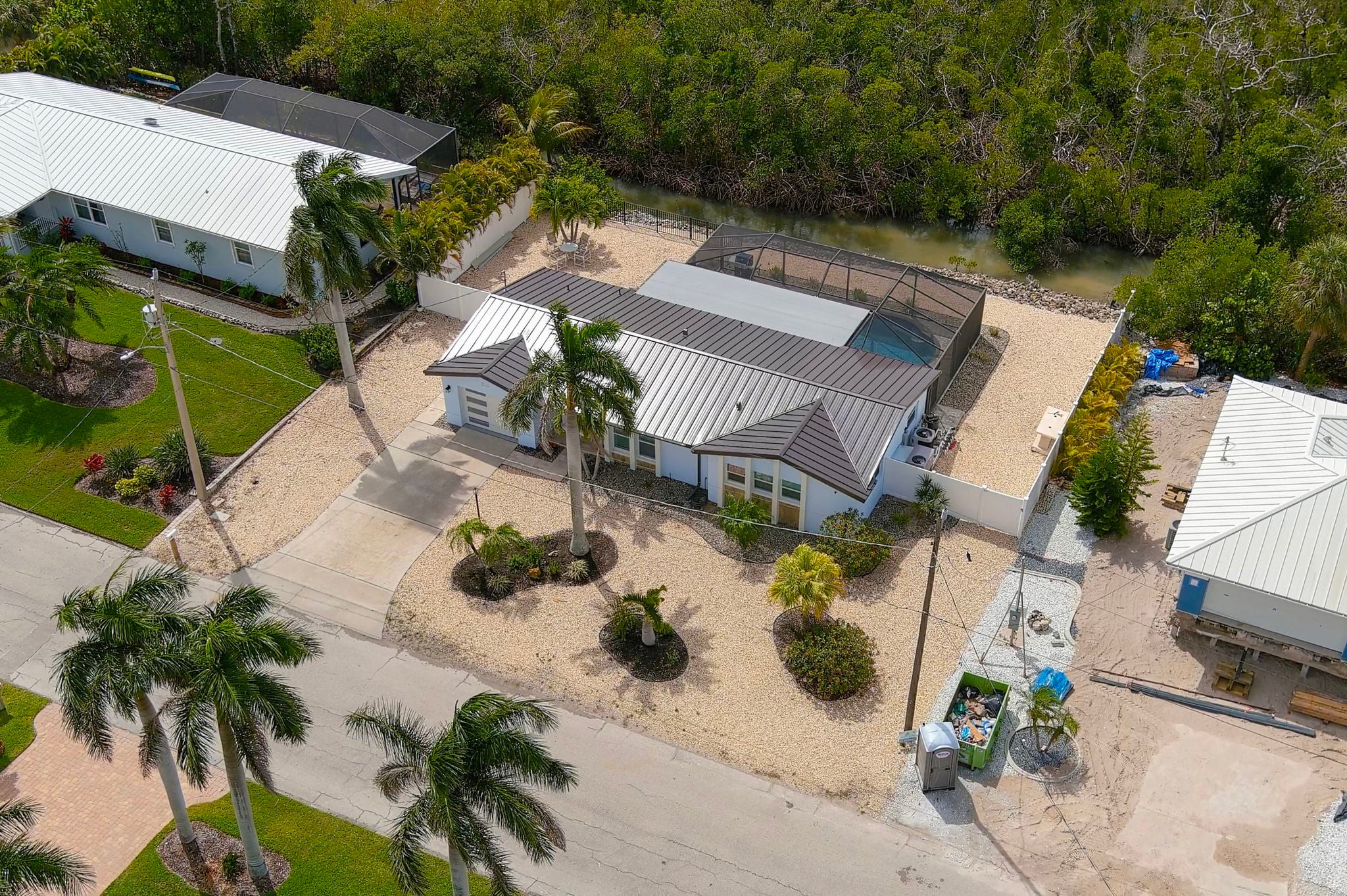
You love the location. The house is another story. Maybe the layout no longer works, the finishes are dated, or every improvement seems to uncover another issue. At some point, it is reasonable to ask: should we remodel this home or start over?
A whole-home remodel usually makes sense when the structure is sound, the layout can be adapted, and the home can meet your goals without extensive code or floodplain upgrades. Rebuilding deserves a serious look when the foundation or structure needs major work, the home is well below required flood elevation, or the changes you want would leave little of the original house intact. The right answer comes from evaluating the property and pricing both scopes, not from comparing two square-foot numbers alone.
That distinction matters in Naples, Bonita Springs, Fort Myers Beach, Sanibel, Fort Myers, and other Southwest Florida communities, where site conditions and floodplain requirements can reshape the project before finishes are selected.
Remodel or rebuild: a quick comparison
| Question | Remodeling may make more sense when… | Rebuilding may make more sense when… |
|---|---|---|
| Is the existing house sound? | Its foundation, framing, and major systems can support the planned changes. | Structural repairs would consume a large share of the budget. |
| Can the layout become what you want? | Selective wall changes and additions can solve the main problems. | Ceiling heights, footprint, or structural constraints prevent the home you want. |
| What does the site allow? | The existing home can be improved within the applicable rules. | A new design makes better use of the lot, setbacks, elevation, and views. |
| What is the floodplain exposure? | The proposed scope can be permitted without triggering major compliance work. | Required upgrades make extensive renovation difficult or uneconomical. |
| What are you really comparing? | A defined remodel scope meets your goals at an acceptable total investment. | A fully scoped new home delivers more value for the investment. |
These are screening questions, not a substitute for a site review. A house can look dated but have an excellent structure. Another can look move-in ready while concealing costly conditions.
What does remodeling versus rebuilding cost in Southwest Florida?
Tri-Town Construction’s Southwest Florida Cost Guide gives these planning ranges, which include design, permit pulling, labor, and construction materials for the listed project types:
| Project type | Published starting range |
|---|---|
| Whole-home refresh | $100–$150 per square foot |
| Midrange whole-home remodel | $150–$250 per square foot |
| Luxury whole-home remodel | $250+ per square foot |
| Starter custom home | $250–$400 per square foot |
| Midrange custom home | $400–$500 per square foot |
| Luxury custom home | $500+ per square foot |
For a 2,500-square-foot home, the published remodeling ranges translate to roughly $250,000–$375,000 for a refresh, $375,000–$625,000 for a midrange remodel, and $625,000+ for a luxury transformation. A 2,500-square-foot new custom home would begin around $625,000–$1 million at the starter tier, $1 million–$1.25 million at the midrange tier, or $1.25 million+ at the luxury tier, before assessing project-specific site and demolition needs.
Those numbers are useful for deciding what deserves a closer look. They are not competing bids. A rebuild comparison needs to account for demolition and removal of the existing home, site work, foundation and elevation requirements, utilities, design choices, and the actual scope of the new house. A remodel comparison needs to account for structural changes, older systems, hidden conditions, and any floodplain compliance work. The value of the lot is not the same thing as the cost of constructing the new home.
The most useful question is: What will each complete, permitted project cost to deliver the home we actually want?
Five checks to make before you decide
1. Check the bones of the house
Start with the foundation, framing, roof structure, signs of water intrusion, and the age and condition of the electrical, plumbing, and HVAC systems. If the structure is solid and the main issues are layout and finishes, a remodel may protect the parts of the property that still work. If major repairs are needed throughout, price them before committing to a design.
2. Test your wish list against the existing footprint
Write down what needs to change, not just which rooms need an update. Are you moving the kitchen? Opening several load-bearing walls? Raising ceilings? Adding significant square footage? Replacing nearly every system and finish?
A remodel can accomplish a lot. But if it requires rebuilding most of the house to get there, a new custom home deserves a side-by-side estimate. Conversely, a focused remodel may give you everything you need without paying to replace a sound structure.
3. Check the flood zone and elevation early
For a home in a Special Flood Hazard Area, proposed improvements may require a substantial improvement review. Under the federal baseline, work that equals or exceeds 50% of the market value of the structure before the improvement can require the building to comply with current local floodplain standards. The structure’s value is distinct from the land’s value. The local authority makes the determination, and local rules may be more restrictive or count work over a cumulative period. Do not assume dividing a project into phases avoids the threshold.
In unincorporated Lee County, for example, the county describes the 50% review for renovations in the Special Flood Hazard Area and its ordinance uses a cumulative five-year period. Requirements for a home within a city or another county need to be checked with that property’s permitting authority. Lee County’s substantial improvement guidance is a helpful starting point, but it cannot decide the requirements for every Southwest Florida address.
This is often the turning point in a remodel-versus-rebuild decision. If compliance requires major elevation or other changes to the existing structure, the original remodeling budget may no longer describe the real project.
4. Price the entire scope on both sides
Ask for two clear scenarios based on the same goals. One should show what it takes to remodel the existing house to the desired result. The other should show what it takes to remove it and build the proposed new home on the site.
Compare design, permitting, engineering, construction, site work, allowances, likely unknowns, and any temporary housing needs. Make sure you know which numbers are included, estimated, or still subject to investigation. A lower initial construction number does not necessarily mean a lower final investment.
5. Decide what you want to keep
The existing house may have qualities a new build cannot easily replace: a mature landscape, a familiar footprint, or details you genuinely love. It may also have limitations that no amount of finish work will solve. The right financial choice should still produce a house that works for you long term.
When remodeling is likely the better fit
Consider a whole-home remodel if you love the property, the structure is sound, and the changes you want are achievable without rebuilding most of the house. It is especially worth exploring when the main goals are a better floor plan, updated kitchens and baths, new finishes, and improvements to comfort and durability.
Start with the whole-home remodel cost breakdown if you need more detail on what the different investment levels include.
When rebuilding deserves a closer look
Price a new home as a real alternative when significant structural work is already required, the existing footprint works against your goals, or floodplain compliance fundamentally changes the renovation scope. A rebuild also offers the chance to plan the home, foundation, systems, and coastal performance together from the beginning.
Rebuilding is not automatically the more expensive or better choice. The answer depends on the existing house, the lot, the permitted scope, and what you want the finished property to become.
How to get to a confident answer
Before you commit to either path, gather your address, approximate square footage, any existing plans or survey, and a short list of what is and is not working in the house. Then have the property reviewed for structural condition, floodplain and elevation exposure, site constraints, and the scope needed to meet your goals.
Tri-Town Construction helps Southwest Florida homeowners plan both whole-home remodels and custom homes. We can talk through what your property allows, what each direction would involve, and where an initial budget should start. If the numbers or the scope do not support the first idea, it is better to learn that before design is far along.
Considering a major change to your home? Schedule a free consultation or call 239-895-2058. Tell us where the property is and what you hope to change.
Frequently asked questions
Is it cheaper to remodel or rebuild a house in Southwest Florida?
Remodeling often costs less when the existing structure is sound and the changes are limited enough to preserve it. Extensive structural work or floodplain compliance can narrow that gap. Compare complete scopes for the same desired outcome before deciding.
Does the 50% rule mean I have to tear down my house?
No. A substantial improvement determination can require an existing home in a regulated flood area to meet current floodplain standards; the required path depends on the home and local review. It does not automatically require demolition. Ask the local floodplain administrator and your construction team to evaluate the proposed scope before assuming either outcome.
Can I remodel in stages to avoid the 50% rule?
Do not plan around that assumption. Some local jurisdictions count improvements cumulatively, and officials evaluate the actual scope and costs. In unincorporated Lee County, the substantial improvement definition includes work over a five-year period. Check the rules for the specific property before planning phases.
What should I do first if I am undecided?
Have the home and property assessed before paying for a fully developed design. A review of structure, desired layout, flood status, elevation, and site constraints can identify whether one option should be ruled out or whether both should be priced.

